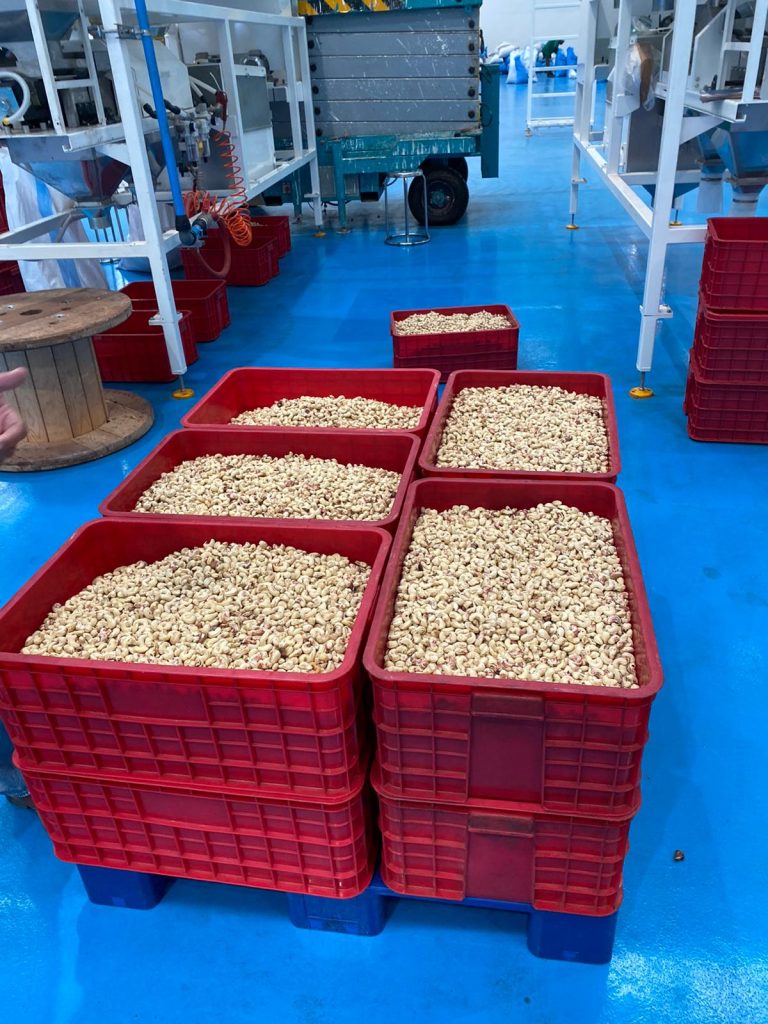
A wave of new cashew harvests is set to reshape the global market, with production projected to rise sharply. This uptick, driven by newly cultivated regions coming into play, signals major shifts in pricing and procurement strategies—especially in Africa and Vietnam, where industry leaders are already mapping out 2025 plans.
The Vietnam Cashew Association (VINACAS) anticipates global raw cashew production will climb by 10–15%, hitting close to 6 million tons. This increase is largely attributed to the harvesting of new planting areas that have now reached maturity. One immediate effect of this expansion is already being felt in African markets, where raw cashew prices are softening due to the supply surge.
In Vietnam, industry leaders and major traders gathered recently to evaluate price trends, output forecasts and procurement plans for the 2025 season. All signs point to a robust harvest year ahead, not only in Vietnam but across other key growing regions like Cambodia and Africa.
At the core of this optimism is the consistency in growing conditions and yield expansion. According to Vu Thai Son, chairman of the Binh Phuoc Cashew Association, global production this year is poised to increase by up to 10% compared to 2024. His estimate is reinforced by parallel observations from Ta Quang Huyen, General Manager of Hoang Son 1 Joint Stock Company. Huyen reports that not only is yield per hectare increasing by roughly 10%, but the total global output could jump as much as 20% as newly planted cashew areas enter full production.
These forecasts are not speculative—they are grounded in cross-regional field surveys and crop data compiled from Vietnam, Cambodia and key African producers. The insights reflect tangible supply-side momentum that is already disrupting existing pricing dynamics, particularly in Africa where Tanzanian raw cashew prices continue to decline.
The broader implication of these shifts is a more competitive and volatile pricing environment for cashew kernels. With post-May market movements harder to predict, stakeholders are approaching future procurement with caution. However, the sentiment remains largely positive. A larger harvest means more flexibility in sourcing and stronger processing volumes for export markets.
Looking ahead to 2025, the outlook for major cashew-growing nations remains favourable. Weather patterns, crop health and new cultivation zones all point to sustained production growth. For investors and stakeholders in the global cashew trade, this signals opportunities not only in trading and processing but also in logistics, storage, and value-added services linked to increased output.
Dekel Agri-Vision PLC (LON:DKL) aspires to become a leading agro-industrial company in West Africa, one that creates value for shareholders whilst at all times placing the interests of the local communities and environment in which it operates in at the heart of its operations.